Small business owners, operators, and managers
AI policy for small business
Create basic employee AI rules, approved-tool tracking, and rollout guidance before staff use AI with company data.
Direct answer: A small-business AI policy should start with a minimum viable rule set: approved everyday uses, restricted data, blocked high-impact workflows, human review expectations, a tool approval owner, and a simple acknowledgement record.
Problem
Employees are already using AI tools, but the business has no written rules for data, review, or approval.
Operational trigger
The trigger is usually practical rather than legalistic: employees are already using ChatGPT, Copilot, Claude, Gemini, or AI features inside SaaS tools, but no one has defined what data is allowed, who reviews output, or how new tools are approved.
Typical small-business risks
Small teams often have more informal access to customer records, sales notes, source files, financial information, and employee details. A basic policy should prevent those categories from entering unapproved AI tools and should explain where employees can ask for approval.
Minimum viable employee rules
The first version does not need a large governance committee. It needs rules employees can follow during normal work.
- Allowed: drafting, summarizing, brainstorming, translation, and internal productivity with non-sensitive information.
- Restricted: customer data, employee records, source code, contracts, unreleased financials, credentials, and regulated information.
- Blocked: final employment, legal, financial, health, credit, eligibility, safety, or customer-impacting decisions without qualified review.
Tool approval ownership
Name one owner for the approved-tools list and one escalation route for new workflows. Even if the owner is the founder or operations lead, the policy should say who can approve exceptions and when vendor evidence is required.
Human review expectations
Small businesses should be explicit that AI output is not final work product by default. Employees should review facts, calculations, customer promises, citations, confidential information, bias-sensitive content, and brand claims before relying on output. For customer-facing, legal, HR, financial, security, or regulated contexts, review should happen before publication, decision, or record creation.
Training and acknowledgement
A policy is easier to defend internally when employees have seen it, understood the basic examples, and acknowledged the rules. A short rollout can include a manager briefing, allowed and blocked scenarios, a knowledge check, an acknowledgement form, and a record of who completed the training. The goal is not bureaucracy; it is making the rule set usable.
Small business AI policy template contents
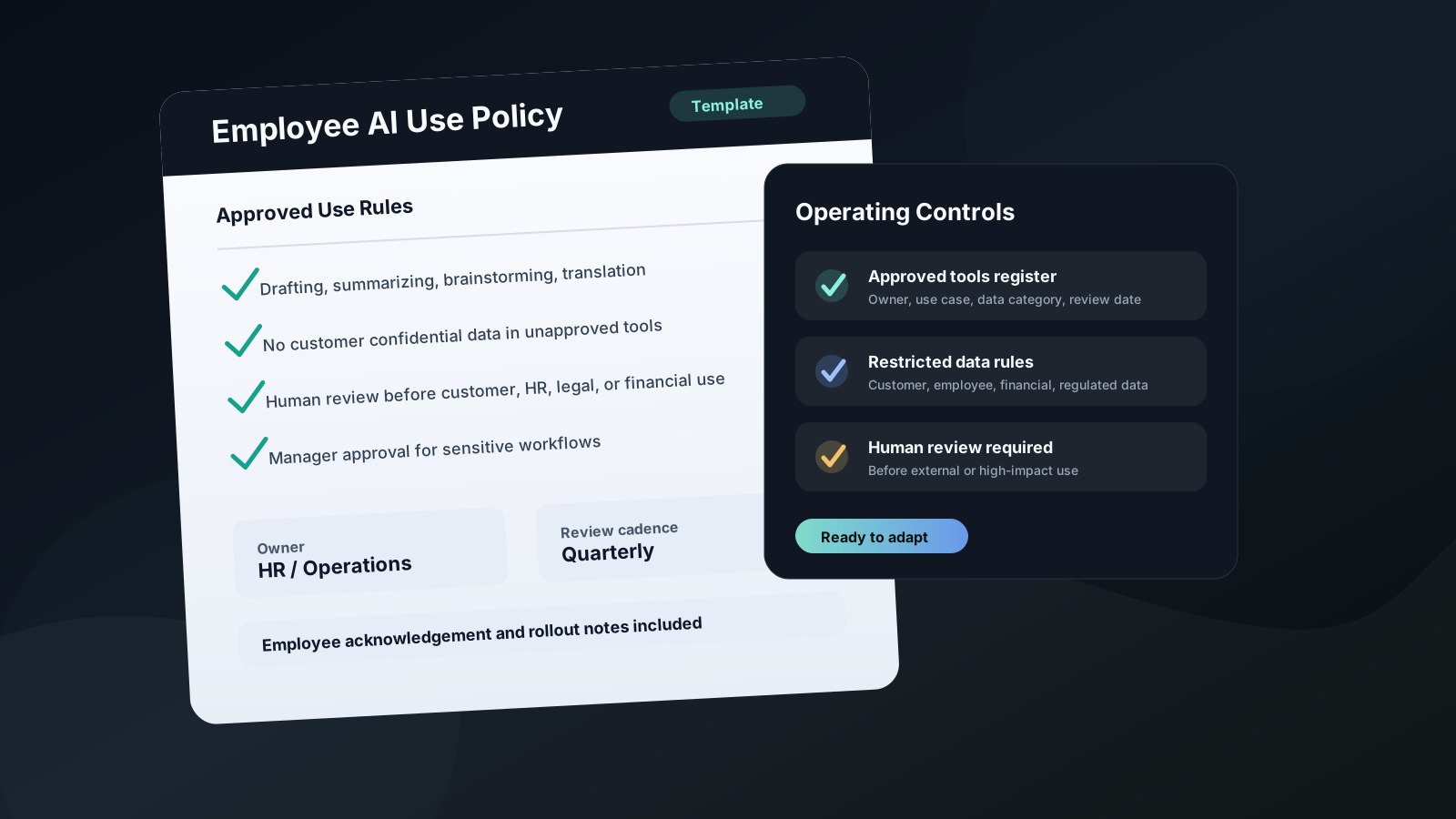
A small business AI policy template should be short enough to roll out quickly but specific enough to change employee behavior. The useful version includes approved uses, restricted data, blocked decisions, human review, approved-tool ownership, employee acknowledgement, and a review date.
- Approved uses: drafting, summarizing, brainstorming, translation, and internal productivity with non-sensitive information.
- Restricted data: customer records, employee data, source code, contracts, credentials, regulated data, and unreleased financials.
- Required records: policy owner, approved-tools list, training acknowledgement, exception path, and next review date.
When a single policy is enough
A single policy can be enough when AI use is limited to low-risk drafting and internal productivity. A starter kit is more appropriate when the business also needs a tool register, training record, acknowledgement workflow, and quarterly review process.
When professional review is required
Get qualified legal, privacy, HR, security, or regulatory review when AI touches employment decisions, regulated data, health or financial contexts, customer contracts, automated decisions, or legal rights.
Practical rollout sequence
- Inventory the AI tools and SaaS AI features employees already use.
- Write allowed, restricted, and blocked examples in plain employee-facing language.
- Publish an approved-tools list with owner, permitted uses, and review dates.
- Run a short training or manager briefing and collect acknowledgement.
- Review questions, exceptions, and tool changes after the first month, then quarterly.
Search intent covered
- AI policy for small business
- small business AI policy template
- employee AI policy
Recommended template path
Start with AI Policy Starter Kit for Companies and use the AI policy template comparison to decide what to include before rollout. You can also inspect the public sample before checkout.
Related operational problems
Review the paid product
 Policy
 ChatGPTOpenAI
 ClaudeAnthropic
 CopilotMicrosoft
 GeminiGoogle